
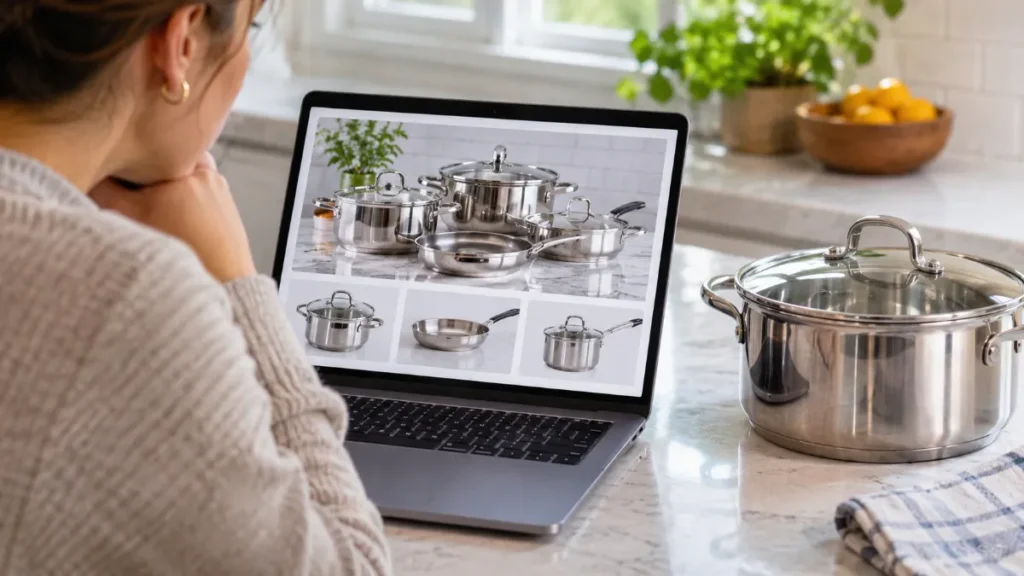
Short answer: If you are wondering where to buy Belgique cookware, start with Amazon, eBay, resale marketplaces, and secondhand stores, where availability depends on individual sellers and existing inventory. Because Belgique cookware can be difficult to find through regular retail channels, checking product condition, seller reliability, and included pieces is especially important.
Finding a matching Belgique saucepan or replacing an older cookware set takes more research than buying a widely stocked brand. The good news is that several shopping options exist, but knowing what to inspect before purchasing can help you avoid missing lids, damaged coatings, and overpriced listings.
Where to Buy Belgique Cookware Online
Online marketplaces are often the most practical starting point because they allow shoppers to compare listings from different sellers without visiting multiple stores.
Amazon is worth checking for individual pots, pans, and occasional cookware sets. However, a search result does not guarantee that an item is currently available or sold directly by Amazon.
- Seller identity: Check whether the product is sold by the marketplace itself or an unbiased third party.
- Product condition: Look for clear descriptions such as new, open box, or used.
- Included pieces: Confirm whether lids, inserts, and accessories shown in photographs are included.
- Return eligibility: Review the specific seller’s return policy before ordering.
- Shipping costs: Compare the complete delivered price rather than the advertised item price alone.
Where to Buy Belgique Cookware Through Resale Marketplaces
Resale platforms can be particularly useful when searching for discontinued cookware, replacement lids, or pieces that match an existing collection.
eBay is a reasonable place to research older cookware because sellers may list individual pans, partial sets, and unused items from previous purchases.
Facebook Marketplace, Mercari, and similar platforms may also have local or shipped listings.
Before buying, request photographs showing the cooking surface, underside, handle connections, and lid edges.
For stainless steel cookware, inspect for severe warping, deep pitting, and loose handles. Minor exterior scratches are usually less concerning than structural damage.
For nonstick cookware, be more cautious. Peeling coatings, exposed metal, or extensive scratches are good reasons to skip a used pan.
Buying Belgique Cookware at Outlets and Secondhand Stores
Physical shopping offers one advantage that online marketplaces cannot always provide: the opportunity to inspect cookware before paying.
Consider checking thrift stores, estate sales, consignment shops, and kitchenware resale stores. Outlet and closeout retailers may occasionally carry older inventory, but Belgique availability should never be assumed.
When inspecting cookware in person, use this quick checklist:
- Place the pan on a flat surface to check for rocking or unevenness.
- Examine the base for significant dents or separation.
- Test handles and lid knobs for movement.
- Check that lids sit properly without obvious gaps.
- Inspect nonstick surfaces for flaking, scratches, or deterioration.
How to Compare Belgique Cookware Sets and Prices
One common shopping mistake is comparing sets based only on the advertised piece count.
Cookware manufacturers and sellers may count lids, steamers, and utensils as separate pieces. Consequently, a larger set does not automatically provide more usable pots and pans.
If you are researching a larger collection, review the Belgique 17 piece cookware set to understand the features and components worth checking against a seller’s description.
For any listing, calculate the cost per usable cooking vessel by dividing the total delivered price by the number of actual pots and pans.
For example, a hypothetical $120 purchase containing six cooking vessels costs $20 per vessel, excluding any separate value assigned to lids or accessories.
How to Avoid Overpaying or Buying the Wrong Cookware
Before purchasing, identify exactly what you need.
If you only need a replacement saucepan, purchasing an entire set may create unnecessary expense and storage problems.
Measure your existing cookware carefully, particularly when searching for replacement lids. Diameter, rim shape, and handle design can differ between collections.
Ask sellers to provide measurements in inches and photographs showing any model markings.
Be especially careful with listings described as rare or collectible. These descriptions do not establish actual market value.
Compare at least three similar listings when possible, accounting for condition, shipping, accessories, and return protection.
For expensive secondhand purchases, use marketplace payment systems that provide buyer protection rather than sending money through unprotected payment methods.
Frequently Asked Questions
Is Belgique cookware still available to buy new? New or unused Belgique cookware may appear through third-party sellers, leftover inventory, or resale listings. Availability varies, so check the product’s actual condition and seller information rather than assuming an item is newly manufactured.
Is buying used Belgique cookware worth it? Used stainless steel cookware can offer reasonable value when the base is flat, handles are secure, and cooking surfaces are in acceptable condition. Used nonstick cookware deserves greater caution because coating wear may be difficult to evaluate from photographs.
What is the safest place to buy Belgique cookware? There is no single marketplace that guarantees the best purchase. Prioritize sellers with clear photographs, accurate descriptions, transparent shipping charges, and meaningful return or buyer protection policies. A slightly higher price may be worthwhile when those protections reduce purchasing risk.