
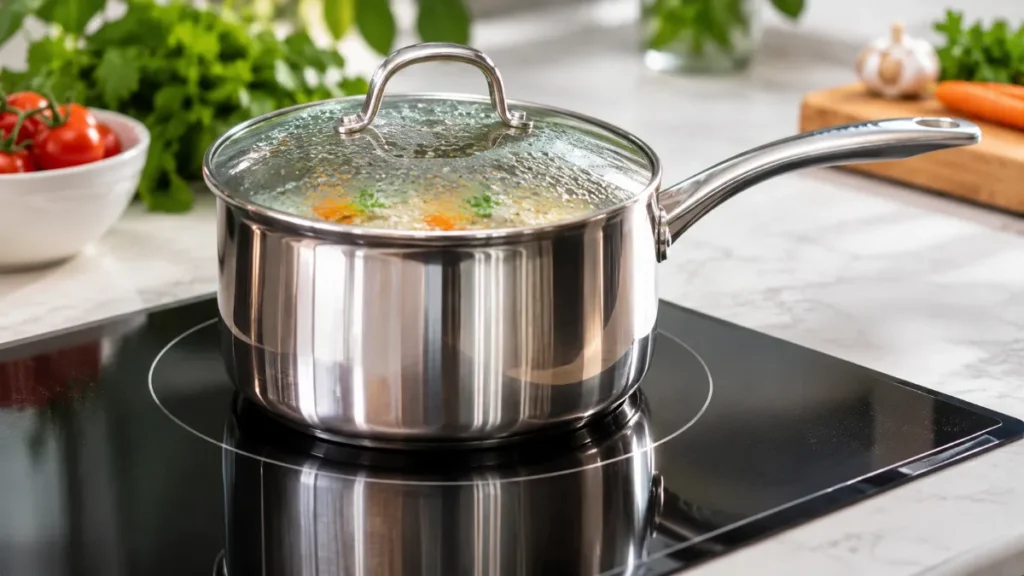
Short answer: Some Belgique cookware may be induction compatible, but compatibility depends on the material and construction of the individual pot or pan. Stainless steel cookware with a magnetic base generally works, while aluminum, copper, and nonmagnetic stainless steel models need a compatible induction-ready layer to function.
If you are researching whether Belgique cookware works on an induction cooktop, the most reliable approach is to check the product specifications and perform a simple magnet test. The brand name or the fact that a pan is labeled stainless steel does not automatically guarantee induction compatibility.
1. Is Belgique Cookware Induction Compatible?
Whether Belgique cookware works on induction depends on its base construction. Induction cooktops generate a magnetic field that heats compatible cookware directly instead of relying on a flame or an electric heating element.
For a pot or pan to work, its bottom needs to contain a magnetic material, typically magnetic stainless steel or another suitable ferromagnetic metal.
- Magnetic stainless steel: Generally compatible with induction cooktops.
- Nonmagnetic stainless steel: May not work unless the base includes a magnetic layer.
- Aluminum: Not induction compatible on its own because aluminum is not ferromagnetic.
- Copper: Pure copper cookware does not work directly on induction.
- Cast iron: Generally compatible because cast iron responds to magnetic fields.
- Clad cookware: Can work when its outer bottom layer is made from magnetic stainless steel.
2. How to Perform the Magnet Test
The magnet test is one of the easiest ways to check whether a Belgique pot or pan is likely to work on an induction cooktop. You only need a small household magnet.
Follow these steps:
1. Turn the cookware upside down so the bottom surface is accessible.
2. Place a refrigerator magnet or another small magnet against the center of the cooking base.
3. Check whether the magnet attaches firmly.
4. Repeat the test near the outer edge of the base.
5. Compare the magnetic attraction in different areas.
How to interpret the results:
- Strong attraction: The cookware is likely to be induction compatible.
- Weak attraction: Compatibility is uncertain. Check the manufacturer’s specifications.
- No attraction: The cookware is unlikely to work on induction.
3. Understanding Induction-Compatible Base Types
The bottom construction of a pan is just as important as its main cooking material. This is particularly relevant when researching stainless steel cookware.
There are three common base designs worth understanding.
Magnetic Stainless Steel Base
This construction uses magnetic stainless steel on the exterior bottom. It allows the induction cooktop to generate heat in the cookware while the interior may use a different stainless steel grade.
Encapsulated Disc Base
Fully Clad Construction
When comparing Belgique stainless steel cookware, pay attention to the listed materials, base design, and explicit induction compatibility information rather than relying on appearance alone.
4. Tips for Using Stainless Steel on Induction Cooktops
Even when stainless steel cookware is induction compatible, using it correctly makes a difference in cooking performance.
Here are practical tips to follow:
Choose the Correct Pan Size
Match the cookware base diameter to the induction cooktop’s cooking zone. A pan with a base around 7 inches generally works better on a similarly sized zone than on a much smaller one, provided both meet the cooktop’s requirements.
Keep the Bottom Flat
Induction cooktops work best with flat-bottomed cookware. A warped or uneven base may produce inconsistent heating or fail to make proper contact with the cooking surface.
Start With Medium Heat
Preheat Carefully
Avoid Dragging Cookware
Check the Cooktop’s Minimum Pan Requirements
5. What to Check Before Buying Belgique Cookware for Induction
If you are considering a Belgique cookware set, do not assume every collection has identical materials or construction.
Use the following checklist when researching a specific product:
- Material: Look for magnetic stainless steel or a clearly identified induction-compatible base.
- Product specifications: Check whether induction is explicitly listed among the compatible cooking surfaces.
- Base construction: Look for an encapsulated magnetic disc or a magnetic stainless steel exterior.
- Bottom diameter: Make sure the pan fits the minimum requirements of your induction cooktop.
- Flatness: Choose cookware with a stable, flat bottom.
- Product-specific information: Check the current listing because specifications can vary between collections and individual pieces.
Frequently Asked Questions
Can Belgique stainless steel cookware work on induction cooktops? Yes, if the cookware has a magnetic stainless steel base or another induction-compatible construction. Stainless steel alone does not guarantee compatibility, so check the product specifications and perform the magnet test.
Will a magnet stick to all induction-compatible stainless steel cookware? Most induction-compatible stainless steel cookware should attract a magnet at its base. However, magnetic strength can vary depending on the steel grade and construction. A weak attraction does not provide enough information to guarantee reliable performance, so check the product documentation.
Can I use Belgique aluminum cookware on an induction cooktop? Aluminum cookware generally cannot work directly on induction because aluminum is not magnetic. However, an aluminum pan with a specially designed magnetic stainless steel base may be compatible. Check the individual product specifications before using it.